
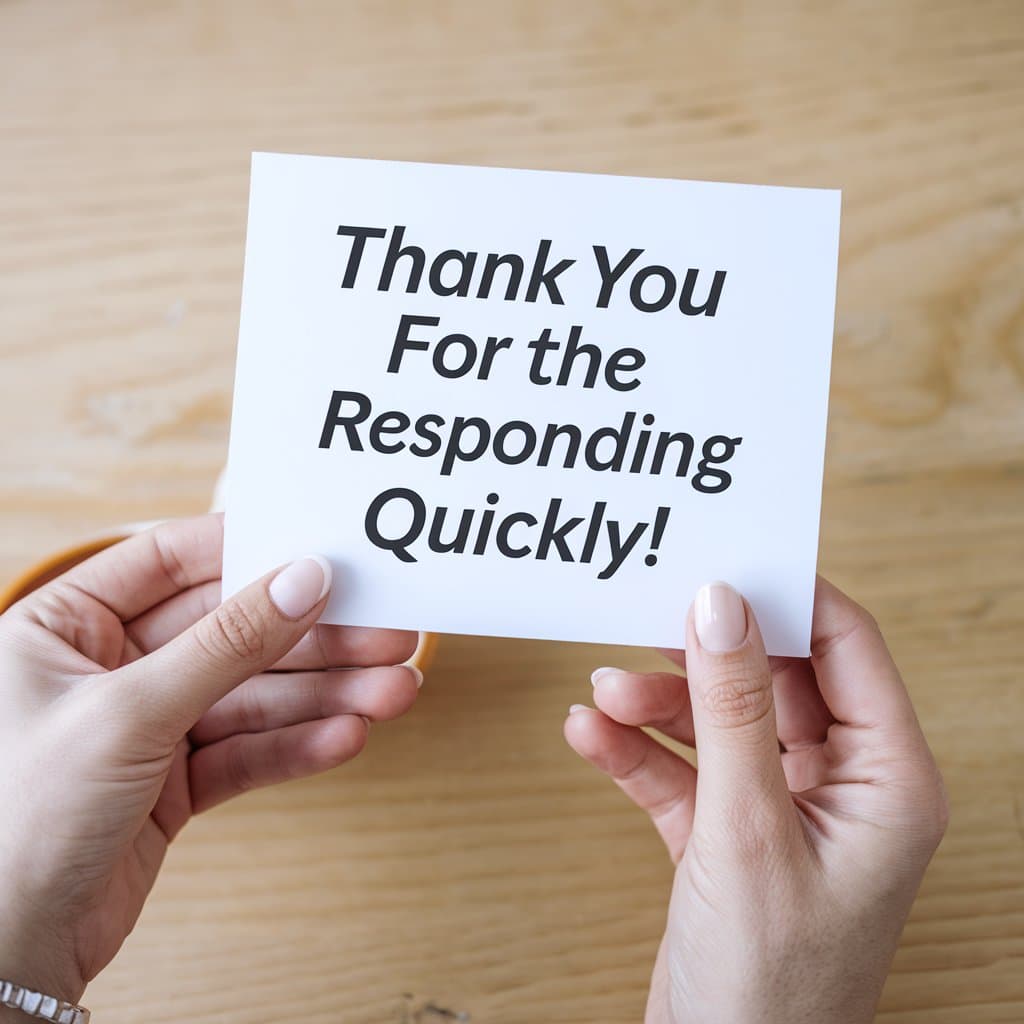
Clear and timely communication has become one of the most valuable skills in both professional and personal interactions. When someone replies promptly, it saves time, reduces stress, and keeps momentum moving forward. That is why expressing appreciation matters more than ever.
While saying “thank you for responding quickly” is perfectly acceptable, repeating the same phrase can feel flat or impersonal. Choosing better alternatives helps you sound thoughtful, professional, and genuinely appreciative.
In this detailed guide, you will discover other ways to say thank you for responding quickly, learn when to use them, and understand how the right words can strengthen relationships, improve collaboration, and leave a positive impression.
Why Acknowledging Quick Responses Matters
A fast reply is more than just good timing. It reflects respect, responsibility, and consideration. When someone responds quickly, they are prioritizing your request, your time, and your needs.
Acknowledging that effort does three important things:
- It validates the other person’s responsiveness
- It encourages future prompt communication
- It builds trust and mutual respect
In professional environments, small gestures like appreciation often lead to stronger teamwork and smoother workflows. In personal communication, it creates warmth and emotional connection.
Is It Correct to Say “Thank You for Responding Quickly”?
Yes, it is absolutely correct.
The phrase is polite, clear, and widely accepted in emails, messages, and formal correspondence. However, using the same wording repeatedly can sound robotic or rushed, especially if you communicate frequently with the same people.
That is where thoughtful alternatives make a difference. They help you sound more human, more engaged, and more intentional with your words.
Professional Alternatives to Say Thank You for Responding Quickly
These options are ideal for emails, work chats, clients, managers, or formal settings.
1. “Thank you for your prompt response.”
This is one of the most professional and widely used alternatives. It sounds respectful and polished without being overly stiff.
Best for: Business emails, formal communication, external contacts
2. “I appreciate your quick reply.”
A friendly yet professional option that feels natural and sincere.
Best for: Colleagues, managers, collaborative teams
3. “Many thanks for getting back to me so quickly.”
This phrase adds warmth while maintaining professionalism.
Best for: Ongoing conversations, follow-ups, teamwork
4. “Thanks for your timely response.”
This emphasizes efficiency and respect for schedules.
Best for: Deadlines, scheduling, approvals
5. “I appreciate how quickly you got back to me.”
A slightly more conversational version that still sounds professional.
Best for: Semi-formal workplace communication
Polite and Friendly Alternatives
These options work well when you want to sound approachable without losing clarity.
6. “Thanks for getting back to me so fast.”
Simple, friendly, and natural.
Best for: Internal teams, casual work chats
7. “Thanks for the fast response.”
Short and effective.
Best for: Messaging platforms, brief emails
8. “I really appreciate the quick turnaround.”
This highlights both speed and effort.
Best for: Projects, reviews, feedback
9. “Thanks for responding so promptly.”
A polite balance between formal and friendly.
Best for: Mixed professional environments
10. “Your quick response is much appreciated.”
Professional but warm, suitable for most situations.
Expressive and Appreciative Variations
Sometimes a fast reply genuinely makes your work easier. These phrases show deeper appreciation.
11. “Your quick response was extremely helpful, thank you.”
This explains why you are grateful.
12. “Thanks for replying so quickly, it really helped move things forward.”
Ideal when speed directly impacts progress.
13. “I’m grateful for your fast response.”
Short, sincere, and respectful.
14. “Thank you for addressing this so quickly.”
Great when someone resolves an issue or concern.
15. “I appreciate your responsiveness.”
This praises consistency, not just one reply.
Casual Alternatives for Informal Communication
These work best for internal chats, friendly coworkers, or relaxed environments.
16. “Thanks for the quick reply!”
17. “Appreciate the fast response.”
18. “Thanks for jumping on this so fast.”
19. “Thanks for the speedy reply.”
20. “Really appreciate the quick response.”
Keep these for situations where a relaxed tone is appropriate.
How to Choose the Right Phrase
Not every situation requires the same tone. Before selecting an alternative, consider:
- Who you are speaking to
- The communication platform
- The urgency of the situation
- Your existing relationship
A formal email may require professionalism, while a team chat can feel more relaxed. The best appreciation sounds natural, not forced.
Adding Meaning to Your Thanks
A short thank you becomes more powerful when you include context. Instead of stopping at gratitude, explain the impact.
Example: “I appreciate your quick response. It helped me finalize the report before the deadline.”
This shows awareness and sincerity.
The Role of Gratitude in Effective Communication
Gratitude strengthens communication in ways that are often overlooked. When people feel appreciated, they are more likely to:
- Respond quickly again
- Stay engaged
- Communicate clearly
- Support collaboration
Over time, simple appreciation helps create a positive communication culture built on respect and efficiency.
Should You Always Thank Someone for Responding Quickly?
Not every message requires it. However, appreciation is especially valuable when:
- The response was time-sensitive
- The person went out of their way
- The reply helped solve a problem
- You are requesting future support
Used thoughtfully, gratitude never feels unnecessary.
Common Mistakes to Avoid
- Overusing the same phrase repeatedly
- Sounding overly dramatic for small actions
- Using casual language in formal contexts
- Making gratitude sound automated
Balance and authenticity are key.
Beyond Words: Showing Appreciation Through Actions
Words matter, but actions reinforce them. You can show appreciation by:
- Responding promptly in return
- Being prepared and respectful
- Acknowledging effort during discussions
- Following through on commitments
Consistency builds trust faster than words alone.
Conclusion
Fast responses keep communication moving, reduce delays, and strengthen relationships. Taking a moment to acknowledge that effort shows professionalism, emotional intelligence, and respect.
While “thank you for responding quickly” is always acceptable, having alternatives allows you to communicate with clarity and warmth. The right phrase can transform a routine exchange into a meaningful interaction.
Whether you choose a professional, friendly, or expressive option, sincere appreciation never goes unnoticed. Thoughtful communication is not about saying more, but saying the right thing at the right time.
Frequently Asked Questions
What is the best professional alternative to “thank you for responding quickly”?
“Thank you for your prompt response” is one of the most professional and widely accepted alternatives.
Can I use casual phrases at work?
Yes, but only when the workplace culture allows it. Always match your tone to the environment and audience.
Is it okay to repeat the same phrase?
Occasional repetition is fine, but varying your language makes communication feel more genuine.
Should I thank someone every time they reply quickly?
Not always, but it is recommended when the response is especially helpful or time-sensitive.
How long should a thank-you message be?
Short and sincere is best. One or two sentences are usually enough.

James Logan is a seasoned blogger and language enthusiast behind Grammar Beacon. With years of experience in grammar and writing, James shares his expertise through insightful and engaging content. His passion for clear communication and linguistic precision shines in every post, making complex grammar concepts accessible and enjoyable for readers. Follow James for expert advice and tips to refine your writing skills.